What a wastegate actually does
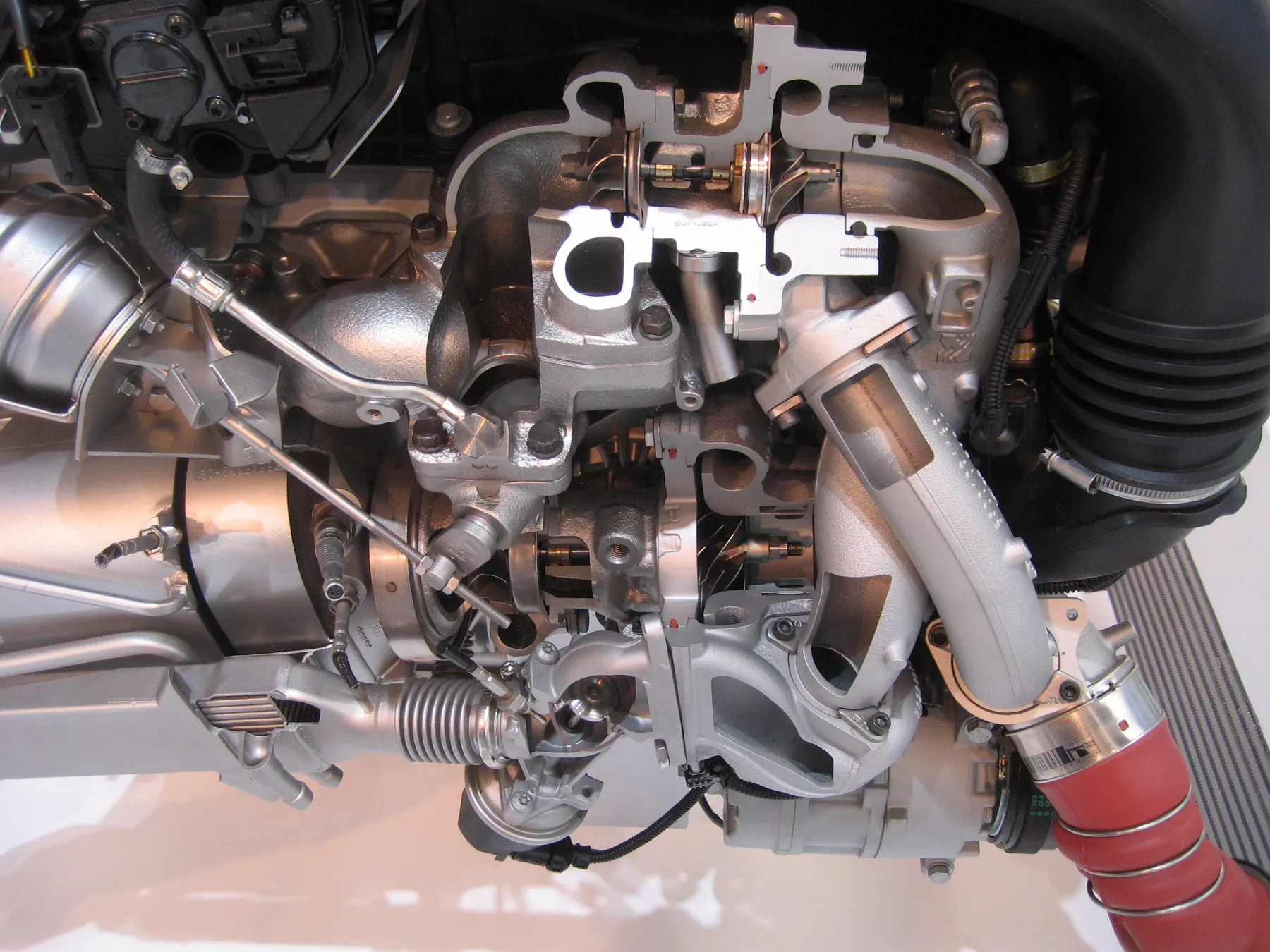
Pop the hood on a turbo four and look at the compressor housing — the cold snail with the intake hose clamped to it. A little can hangs off the side. A hose runs from the housing into that can. A rod comes out the other end and disappears toward the hot side. That rod is the wastegate actuator. It is the only moving part you can usually see without pulling the turbo.
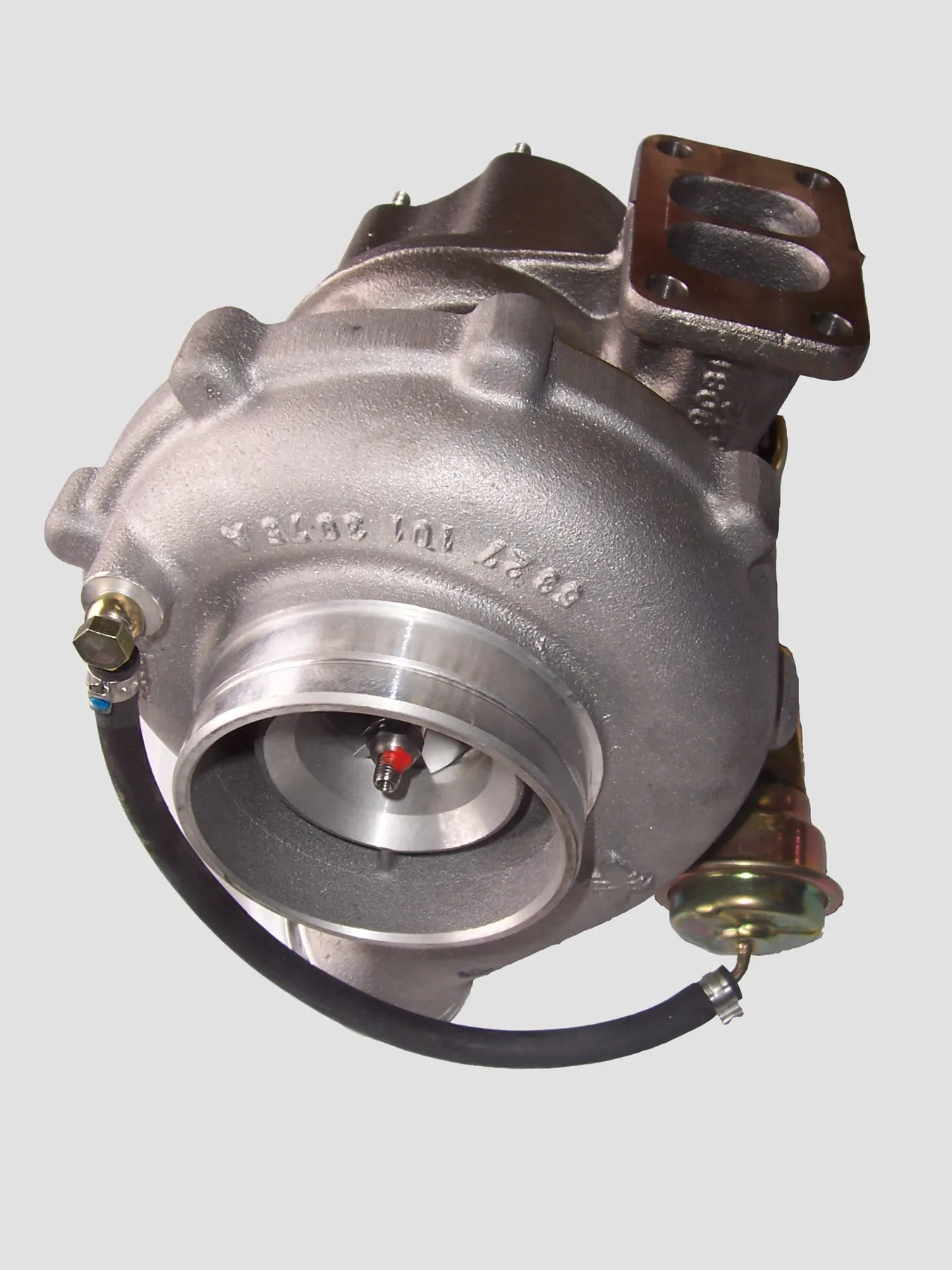
The turbo is one shaft with a wheel at each end. Exhaust hits the turbine. The shaft spins. The compressor packs air into the intake. More air means more fuel, more bang, more exhaust. Left alone, that loop feeds itself. The turbine does not have a polite top speed.
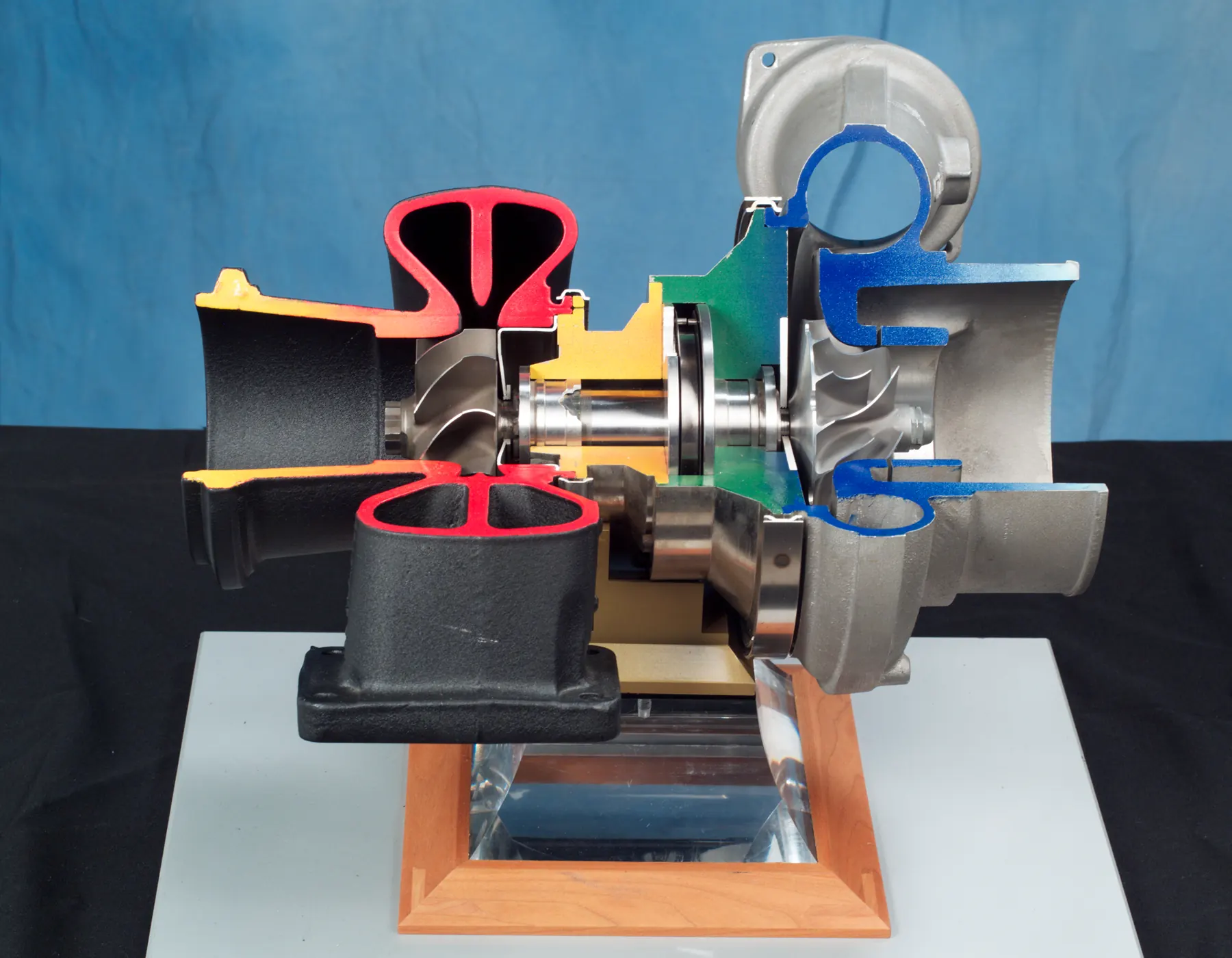
The wastegate is a door in the hot housing. When it opens, some of the exhaust takes a shortcut around the turbine wheel and dumps into the downpipe without paying the wheel. That is the job: a bypass, not a brake on the shaft.
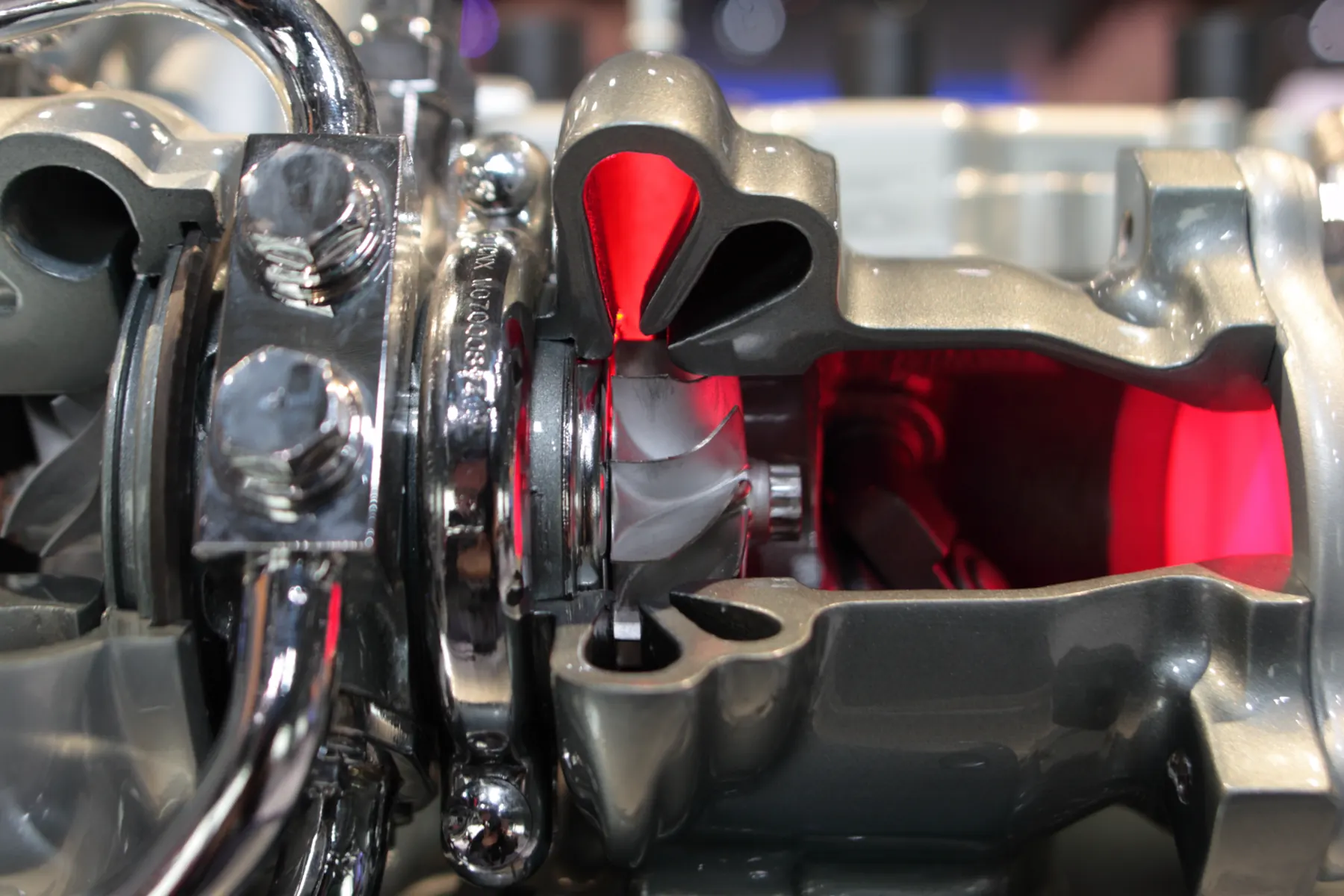
The actuator is what pulls the door. On a lot of street turbos the can is a diaphragm. Boost off the compressor, or a line the engine computer pulses, moves the rod. The rod opens a flapper inside the turbine housing, or a valve on a pipe that branches off the housing and skips the wheel. Internal or external, the path is around the turbine, not through it.
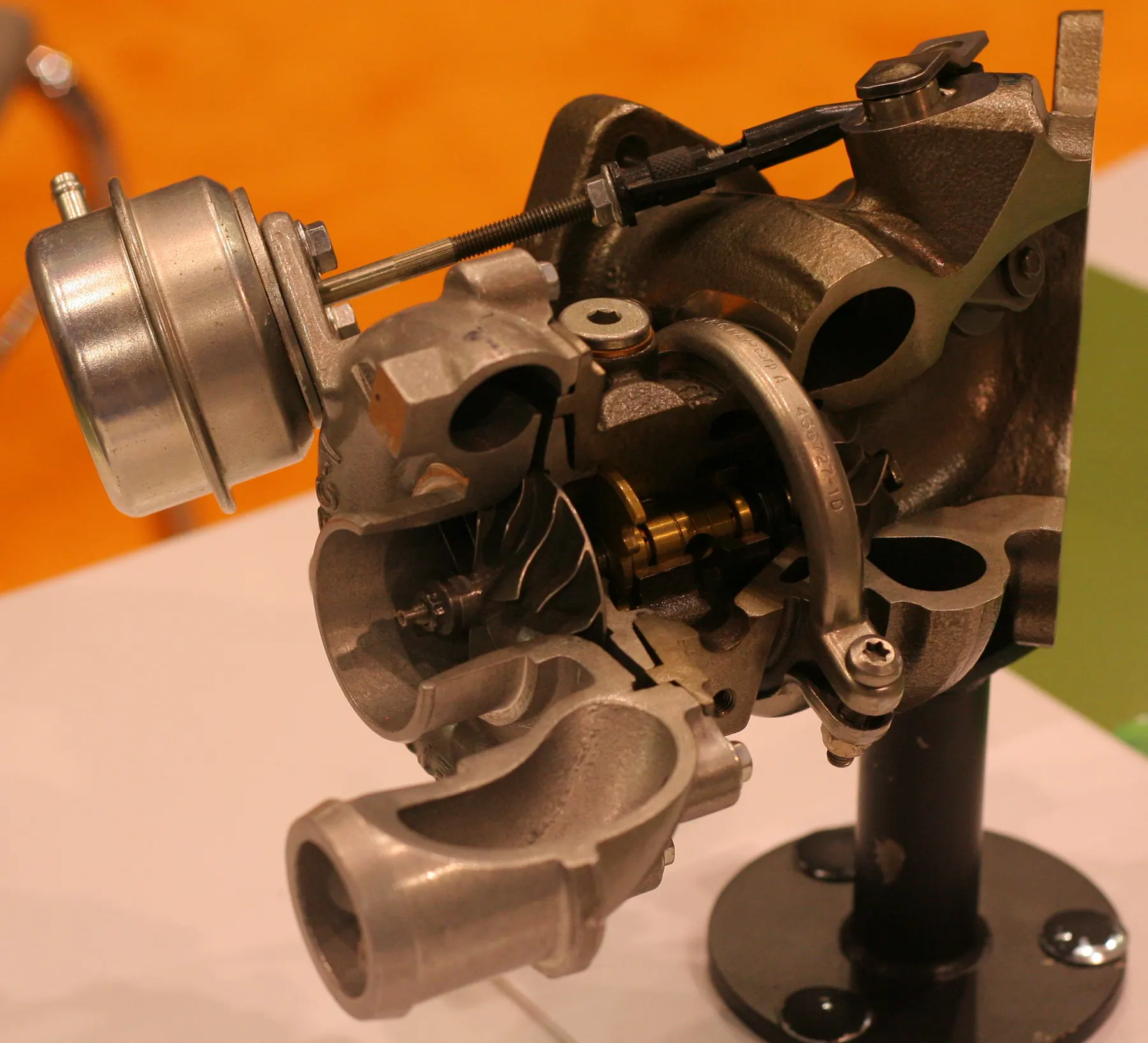
The computer is aiming at a boost number, not a turbine speed. Once the door is cracked, extra exhaust energy leaves without spinning the wheel any harder. That is why boost does not just keep climbing until a hose lets go. The wastegate is the ceiling.
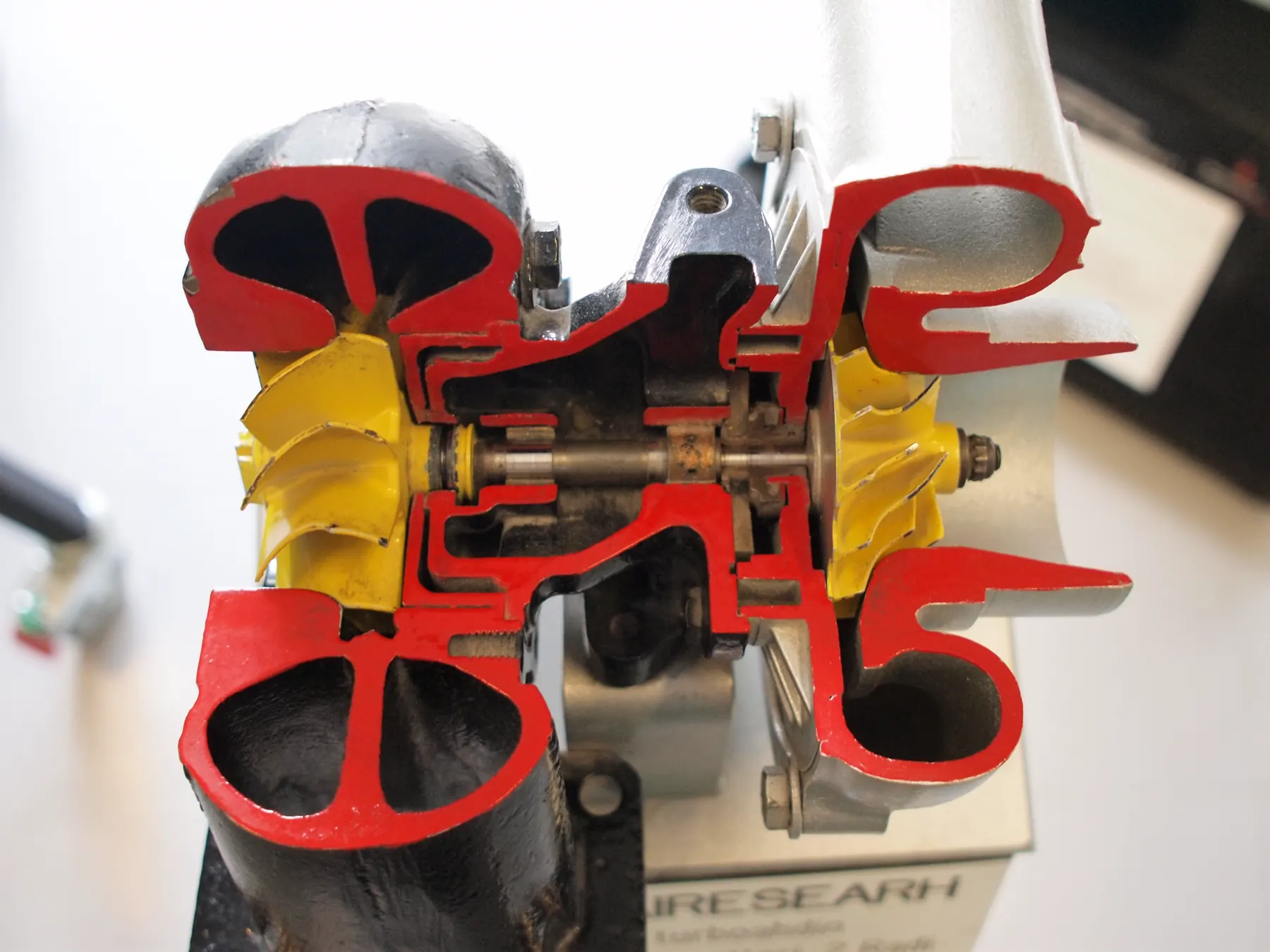
A wastegate stuck shut is a runaway. Stuck open is a lazy car that never builds. The rod you can see from the hood is the tell. If it moves when you rev in the driveway, the door is doing the work.