What the Monroney sticker actually shows
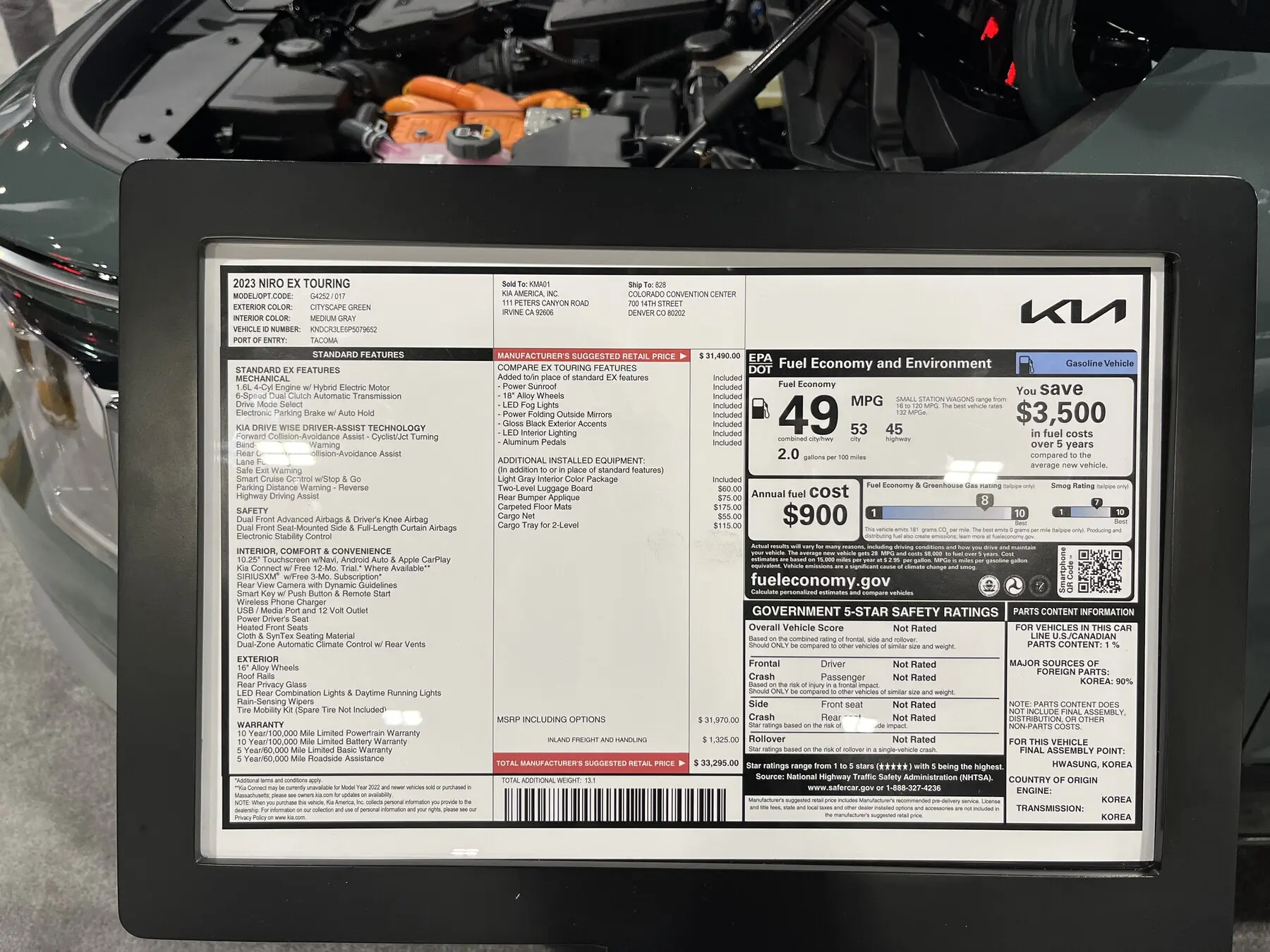
Is the window sticker the same thing as the EPA label? No. The Monroney is the whole sheet in the glass. The EPA fuel-economy block is one required panel on that sheet.
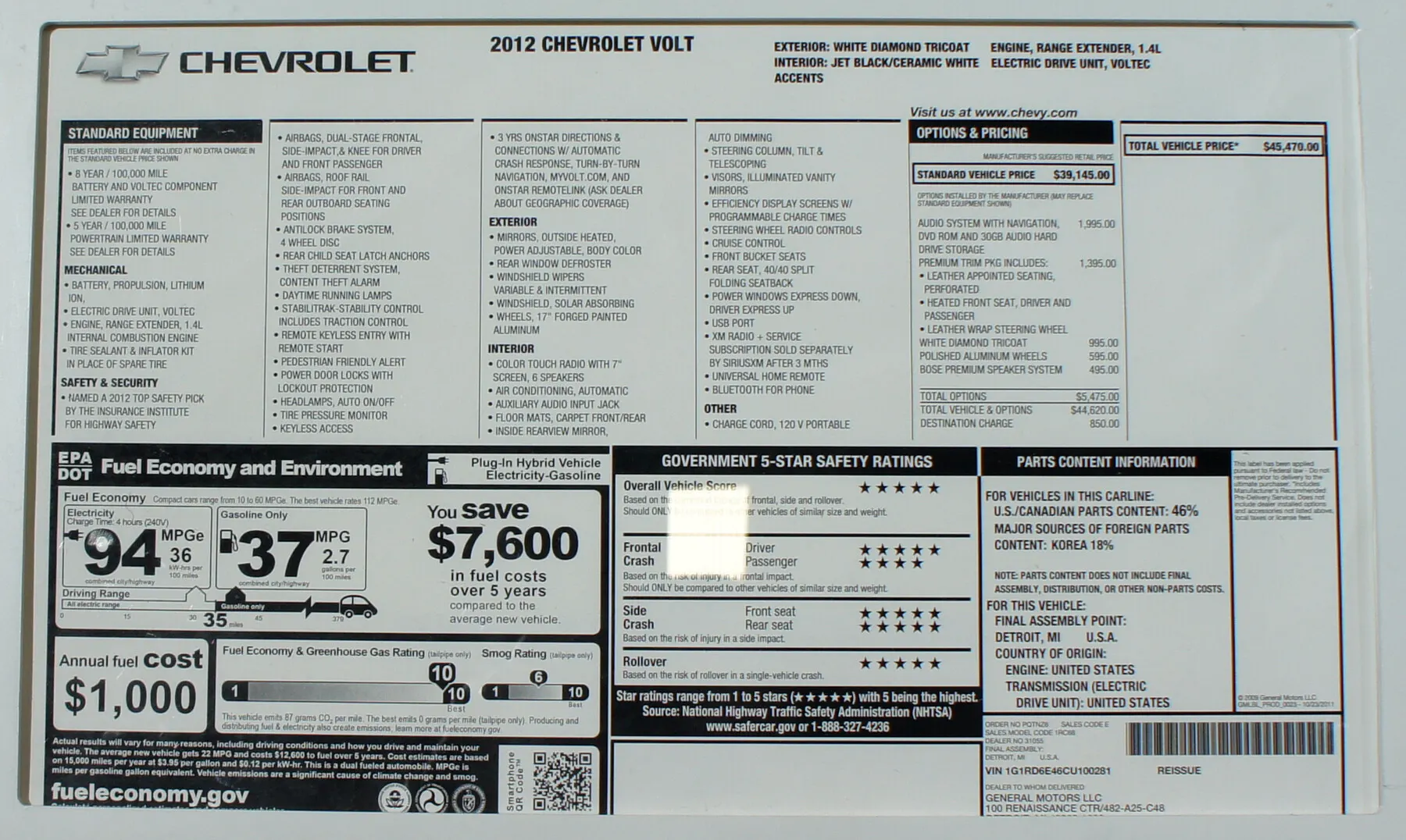
A new U.S. car has to wear it. The sheet lists the manufacturer’s suggested retail price for the vehicle as built, each factory option with a price, and the destination charge. That is the factory money line. It is not a store add-on and it is not a bid.
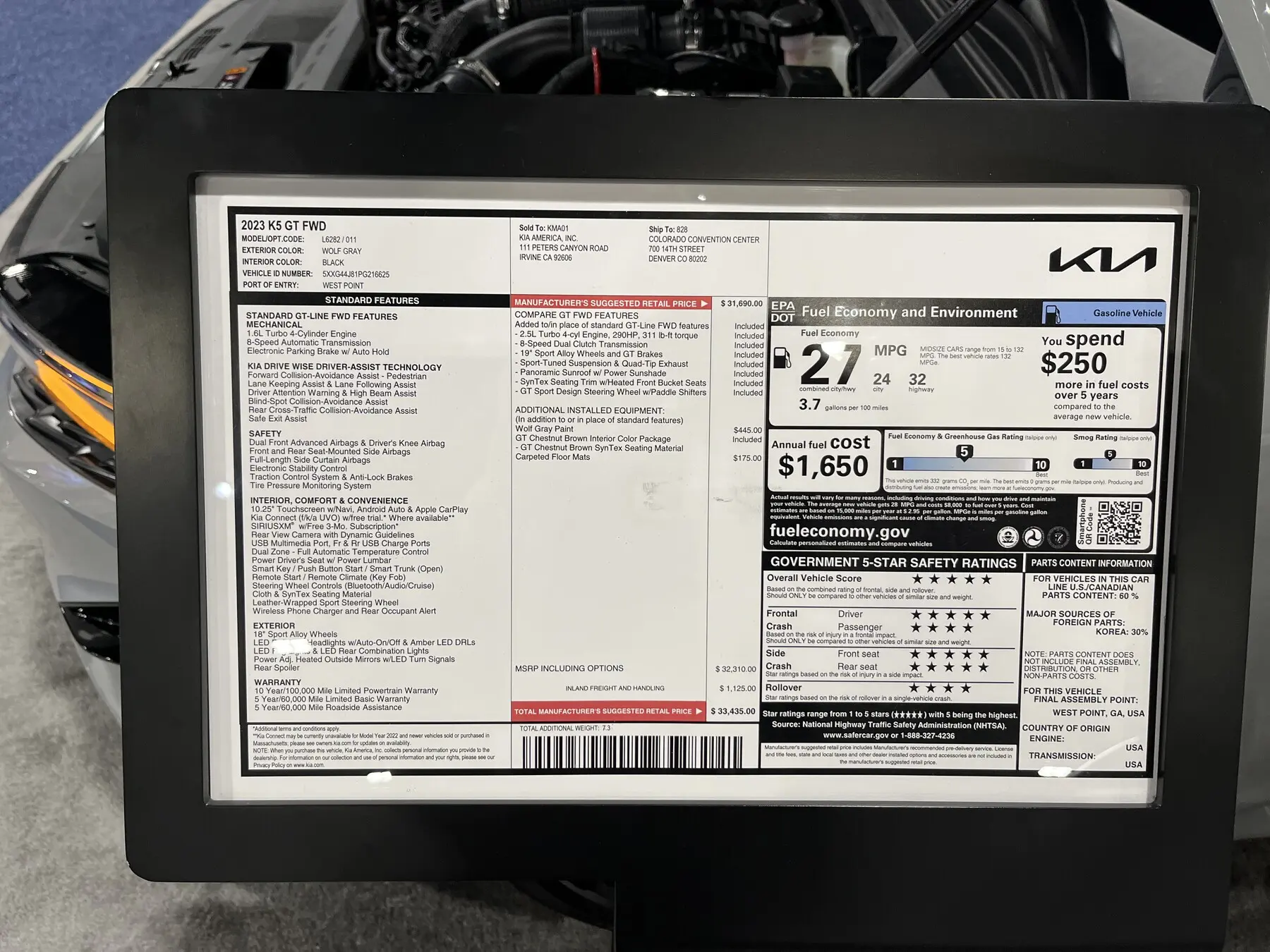
Safety ratings sit on the same pane: NHTSA stars for frontal, side, and rollover, plus an overall score. Crash ink, not a deal.
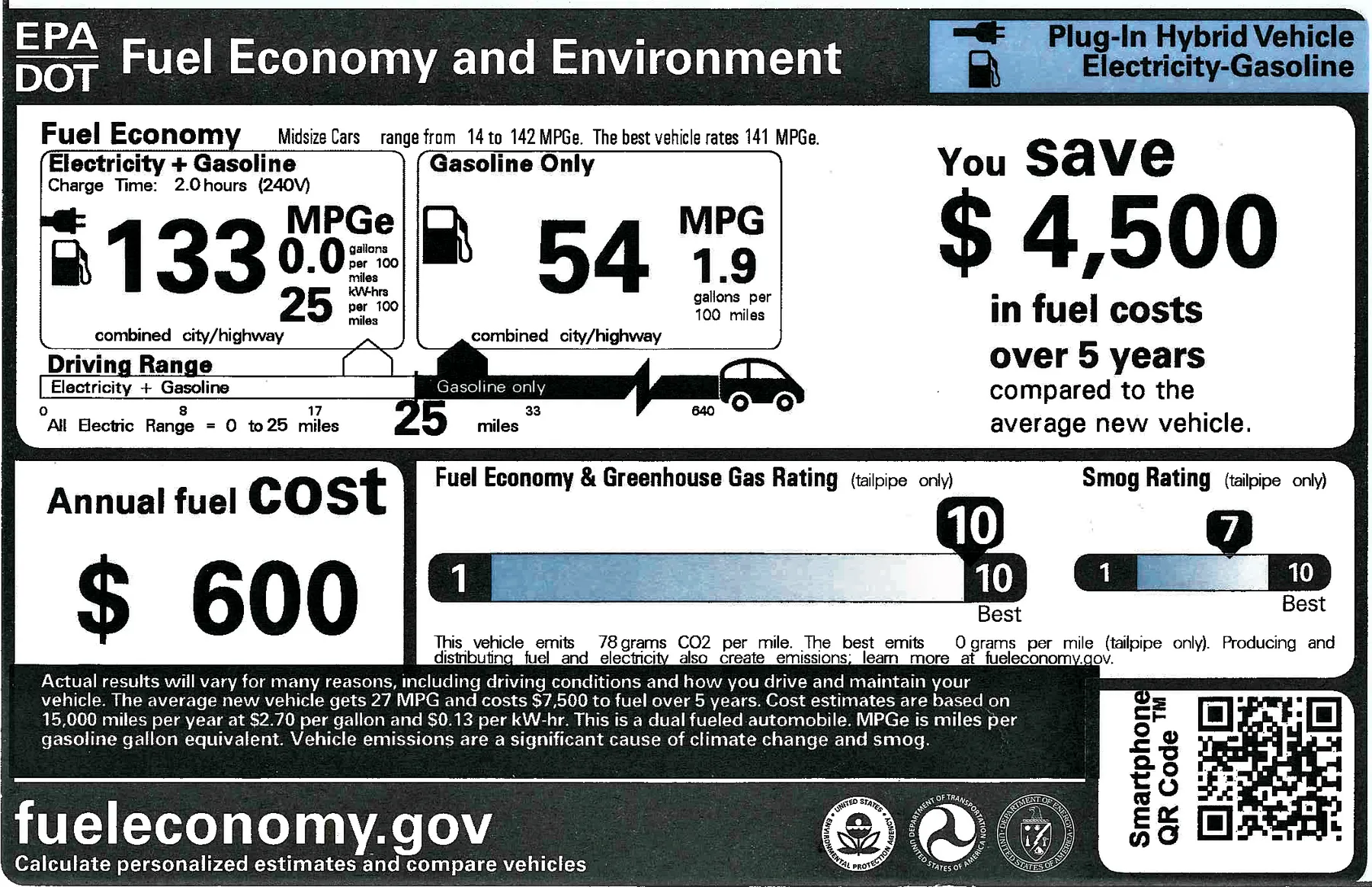
Then the fuel-economy panel — the part people point at and call the EPA sticker. City, highway, combined. Gallons per hundred miles. A class bar. An estimated yearly fuel cost. On a plug-in the same box splits electric MPGe from gasoline mpg and draws a range bar. That panel is the EPA and NHTSA Fuel Economy and Environment label. It is required. It is not a brochure average.
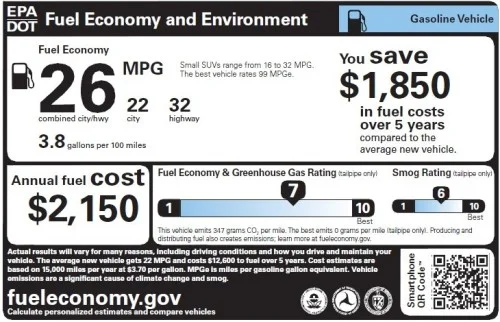
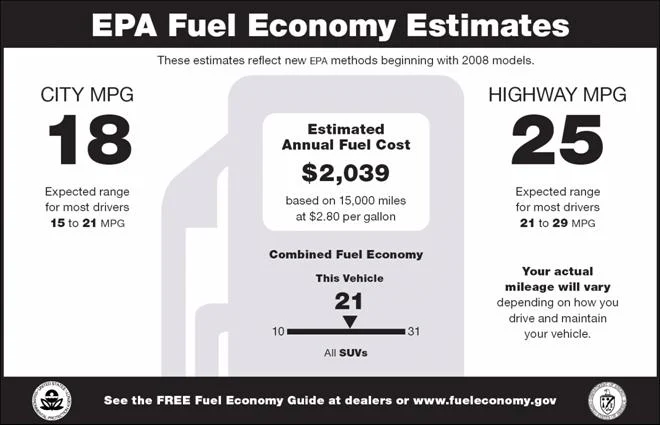
The 2008-era box was city, highway, a cost line, and a class slider. The current label added the environment strip, the fuel-type header, and the codes. Same job: rate this configuration, not the nameplate.
A hybrid crossover on a show stand wears the modern layout the same way. Combined mpg lives in the EPA block. Base price, options, and freight live in the columns next to it. Two jobs, one pane.
A plug-in prints two economies in that block: MPGe on the plug and mpg on the tank. Those are the official ratings for that hardware. A website number for the nameplate can be a different tire or a different axle.
The glass is married to the car in front of you. Brochure 32 mpg can be another wheel or another drive. The number on the sticker is the EPA rating for that VIN’s build. If the sheet is missing at delivery, ask for it. That is the paper that came with the vehicle.